 2026-08-05 00:00:00
Active Balancing BMS For Commercial Solar Storage Cabinet Integrators
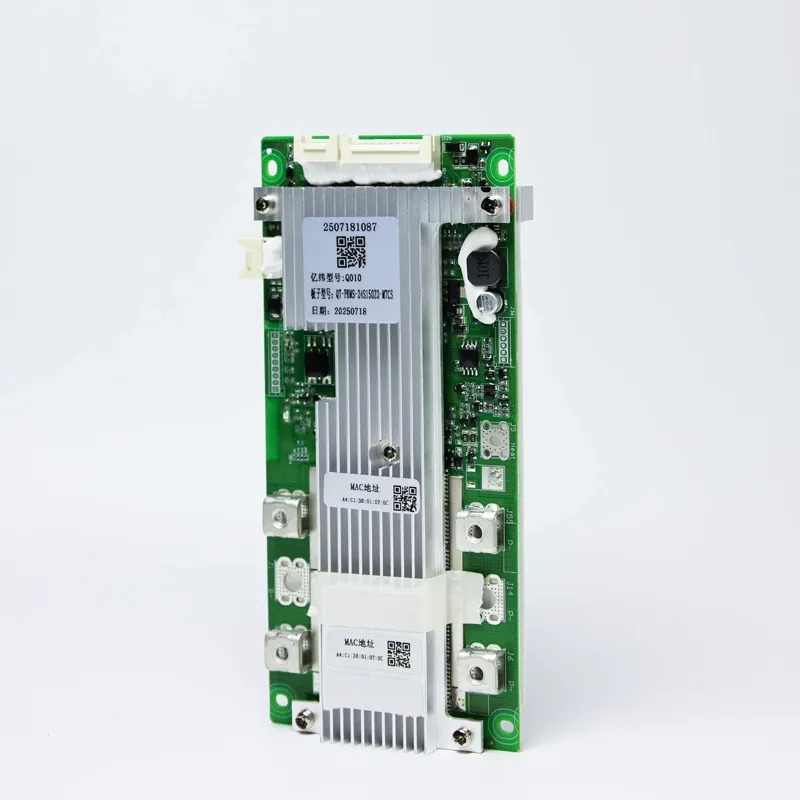
active balancing BMS for commercial solar storage cabinet integrators should be selected by battery chemistry, cell count, pack or rack voltage, continuous and peak current, sampling channels, balancing mode, temperature sensors, insulation monitoring, contactor control, communication protocol, alarm logic, and quantity. B2B buyers should confirm application, quantity, quality standard, packaging, destination country, and delivery target before requesting a final quote.
Customer Pain Points Behind active balancing BMS for commercial solar storage cabinet integrators
Buyers searching for active balancing BMS for commercial solar storage cabinet integrators usually have a real sourcing or engineering problem, not a casual browsing need. The common pain is that battery system integrators need reliable protection and data but may delay current profiles, protocol maps, balancing, insulation logic, and vehicle or ESS interfaces until integration. A product name alone does not define the operating conditions, technical target, quantity, quality requirements, packaging, or delivery schedule. When these details are missing, the quotation may be fast, but the selected specification can still be wrong for the project.
For Qualtech BMS, this topic should be handled as a B2B selection issue. Typical buyers include battery PACK factories, ESS integrators, EV and electric vessel manufacturers, microgrid contractors, renewable energy developers, and industrial energy storage project teams. They need a supplier who can connect the keyword to measurable parameters, batch consistency, export packing, and after-sales communication. Production buyers may care about trial results and acceptance checks. Distributors may care about repeatable SKU planning and private-label packaging. OEM buyers may need drawings, samples, and clear confirmation before placing a trial order.
The deeper purchasing risk is incomplete communication. Many inquiries ask only for price, but a factory needs the operating environment, technical target, quantity, destination country, and customization details before recommending a reliable option. Clear sourcing content must therefore qualify the buyer while explaining the selection logic. It should help the buyer prepare a better RFQ and help the supplier avoid low-quality inquiries that do not match project, wholesale, or OEM purchasing.
Product Parameters B2B Buyers Should Confirm
For active balancing BMS for commercial solar storage cabinet integrators, the buyer should confirm battery chemistry, cell count, pack or rack voltage, continuous and peak current, sampling channels, balancing mode, temperature sensors, insulation monitoring, contactor control, communication protocol, alarm logic, and quantity. These specifications are not decorative. They decide whether the product can work under real site conditions, whether the sample can pass approval, and whether repeat orders will remain consistent. The recommended route is to connect the required application with the product family, then compare performance, material, testing, and delivery requirements before asking for a final quote.
| Buyer Need | Recommended Product | Key Specification | Why It Matters |
|---|---|---|---|
| Project fit | high voltage BMS | chemistry, voltage platform, and communication protocol | sets BMS architecture and system integration logic |
| Stable quality | high voltage BMS | SOC/SOH, insulation, thermal, and fault protection | supports safe operation and maintenance visibility |
| Bulk supply | Customized BMS and energy storage control systems | Quantity, packaging, labeling, lead time | Helps distributors and contractors plan repeatable delivery |
| Technical selection | Application-matched solution | Working environment, drawings, testing needs | Reduces sample rejection and field failure risk |
The buyer should also clarify whether the order is for a tender, a sample approval, distributor inventory, OEM branding, or a project shipment. A trial order may focus on validation, while a project order also requires batch inspection, documentation, packaging photos, delivery planning, and clear communication before shipment.
How the Product Solves the Customer's Pain
Qualtech BMS supports this sourcing problem by reviewing battery chemistry, cell count, pack or rack voltage, continuous and peak current, sampling channels, balancing mode, temperature sensors, insulation monitoring, contactor control, communication protocol, alarm logic, and quantity and matching high voltage BMS to the buyer's application, testing needs, order quantity, and export schedule.
The practical solution is to move from a broad keyword to a controlled selection process. First, define the application: commercial solar storage, autonomous robots, electric forklifts, marine battery systems, telecom backup batteries, industrial packs, and high-voltage systems. Second, confirm the measurable parameters. Third, check whether a standard model is enough or whether OEM/ODM customization is needed. Finally, confirm quantity, packaging, inspection documents, and delivery schedule before production.
This approach protects the buyer from choosing only by price or appearance. It also gives the factory enough information to recommend a model, identify possible risks, and prepare a quote that can actually be used for procurement approval. For export buyers, this is especially important because mistakes discovered after shipment can cause project delays, warranty disputes, or expensive replacement work.
Best For / Suitable For / Not Suitable For
Best for: battery PACK factories, ESS integrators, vehicle developers, marine power teams, and industrial battery system builders sourcing BMS hardware.
Suitable for: battery PACK factories, ESS integrators, EV and electric vessel manufacturers, microgrid contractors, renewable energy developers, and industrial energy storage project teams who need bulk supply, project support, technical selection, sample approval, private-label packaging, or repeat purchasing.
Not suitable for: homeowner-only solar questions, stock market news searches, chemistry homework, job inquiries, and traffic without voltage platform, battery chemistry, system capacity, or project quantity.
Application Scenarios
A forklift fleet conversion team may need high voltage BMS architecture with contactor control, thermal alarms, charger handshake, and service records.
In this kind of scenario, the buyer cannot choose only by the product title. The correct decision depends on process conditions, material, target performance, inspection method, service expectations, and delivery requirements. If the buyer sends photos, drawings, target specifications, and expected quantity, the factory can respond with a more accurate recommendation and avoid generic pricing.
Quality Control and Customization
Quality control should include BMS hardware inspection, voltage and temperature sampling checks, insulation monitoring review, communication testing, protection logic verification, aging or functional test, and system interface confirmation.
Customization should be discussed before quotation, not after production. Options may include voltage platform, current range, sampling channel, CAN, RS485, Ethernet protocol, insulation monitoring, contactor control, thermal management interface, cloud platform, cabinet integration, and project documentation. The final scope depends on order quantity, technical feasibility, testing requirements, and lead time. For B2B buyers, the most important point is to confirm what must be standard, what can be customized, and what needs sample approval before mass production.
RFQ Checklist
For an accurate quotation, please provide:
- Product model or application
- Project country and working environment
- Required quantity and expected delivery schedule
- Key specifications, drawings, photos, or sample reference
- Custom logo, color, packaging, labeling, or OEM requirement
- Certification, inspection, or testing requirement
- Shipping method, container planning, or distributor packing needs
FAQ
What information should I provide before requesting a quote?
Please provide the application, country, quantity, key specifications, drawings or photos if available, packaging requirement, certification requirement, and delivery schedule. For project or OEM orders, also include the target market, expected service condition, and whether a sample approval process is required.
How do I choose the right model for my project?
Start from the actual working condition and compare battery chemistry, cell count, pack or rack voltage, continuous and peak current, sampling channels, balancing mode, temperature sensors, insulation monitoring, contactor control, communication protocol, alarm logic, and quantity before comparing price. If the project has special process, safety, environmental, branding, or documentation requirements, send those details early so the supplier can check the correct configuration.
Can this product be customized for OEM or project use?
Yes. Customization can usually cover the specification range, material, packaging, labels, inspection records, and project-specific documentation. Feasibility depends on quantity, production limits, and testing requirements.
What quality documents should B2B buyers check?
Ask for specification sheets, inspection standards, test records when available, product photos, packing photos, and shipment information that matches the product category and destination market. For repeat orders, also confirm batch consistency, change control, and after-sales communication.
How long does production or delivery usually take?
Lead time depends on quantity, customization, material availability, sample approval, production schedule, inspection, and shipping route. Standard products are usually faster, while OEM or project orders need time for confirmation, production, inspection, and export packaging.
Internal Links
CTA and Lead Qualification Questions
Need active balancing BMS for commercial solar storage cabinet integrators for a B2B project or repeat supply? Send application, key specifications, quantity, customization needs, destination, and delivery schedule.
Lead qualification questions:
- What is the application or project scenario?
- What quantity do you need for the first order?
- What specifications, drawings, or samples can you provide?
- What customization, logo, packaging, or documentation is required?
- What is the destination country and delivery schedule?
- Are you buying for a project, distribution, OEM brand, or internal production use?

 0571-85826623
 Address:3-5/F, Building 2, Electromechanical Function Zone, No. 1418-50, Moganshan Road, Yuhang District, Hangzhou, China

.c197185.png)
.f107e57.png)
.12e1515.png)